

Layers of light: how a living room should glow
A chandelier is a statement, not a lighting plan. The rooms that feel effortless at 9pm are built from three quiet layers working together.
Words by the Urvania studio3 min read
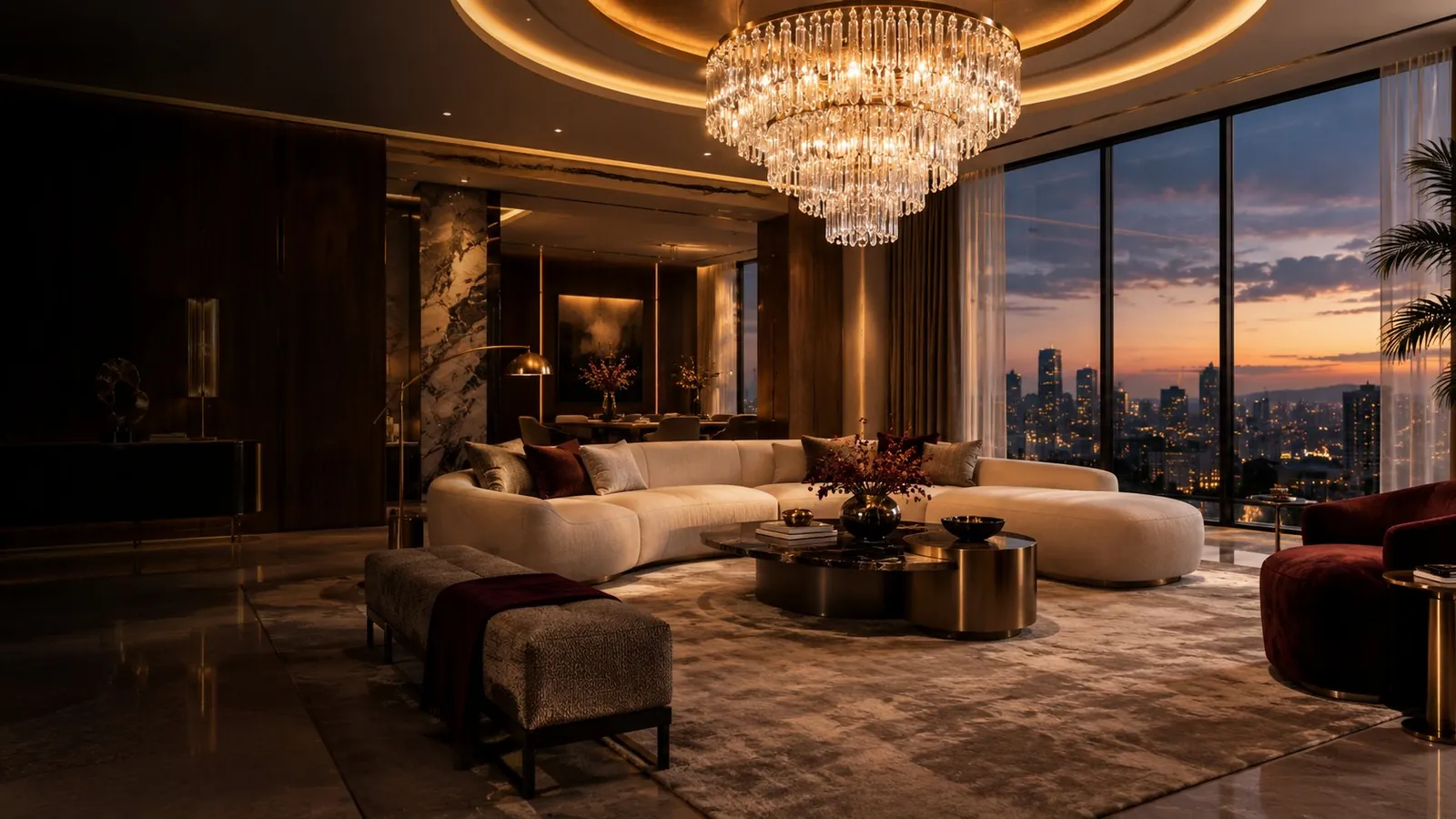
Walk into a living room that feels right at night and you will rarely notice a single light. You notice the warmth on the ceiling, the glow along a shelf, the pool of light where someone is reading. What you are seeing is layering — and it is decided on the drawings long before a fixture is chosen.
Start with the ambient layer
Ambient light is the general glow that lets you move through a room comfortably. In a luxury home it should be soft and indirect: cove lighting washing a ceiling, a concealed profile above a wall panel, or a field of well-spaced, glare-free downlights. The aim is to light surfaces, not people’s eyes.
Because ambient light touches every surface, its colour matters more than any other layer. Most homes feel best at a warm white of around 2700–3000K. Mix colour temperatures in one room and the walls start to look patchy; keep them consistent and finishes like walnut, brass and travertine read as they were chosen.
Light the surfaces, not the eyes. A room should glow — it should never glare.
Then the task layer
Task lighting is where you need to see clearly: a reading chair, a bar counter, a study desk. It should be brighter and more focused than the ambient layer, and placed so that the shadow of your own hand or head does not fall across what you are doing. A floor lamp at the shoulder of a lounge chair is task lighting; so is a slim profile under a floating shelf.
Finish with accent light
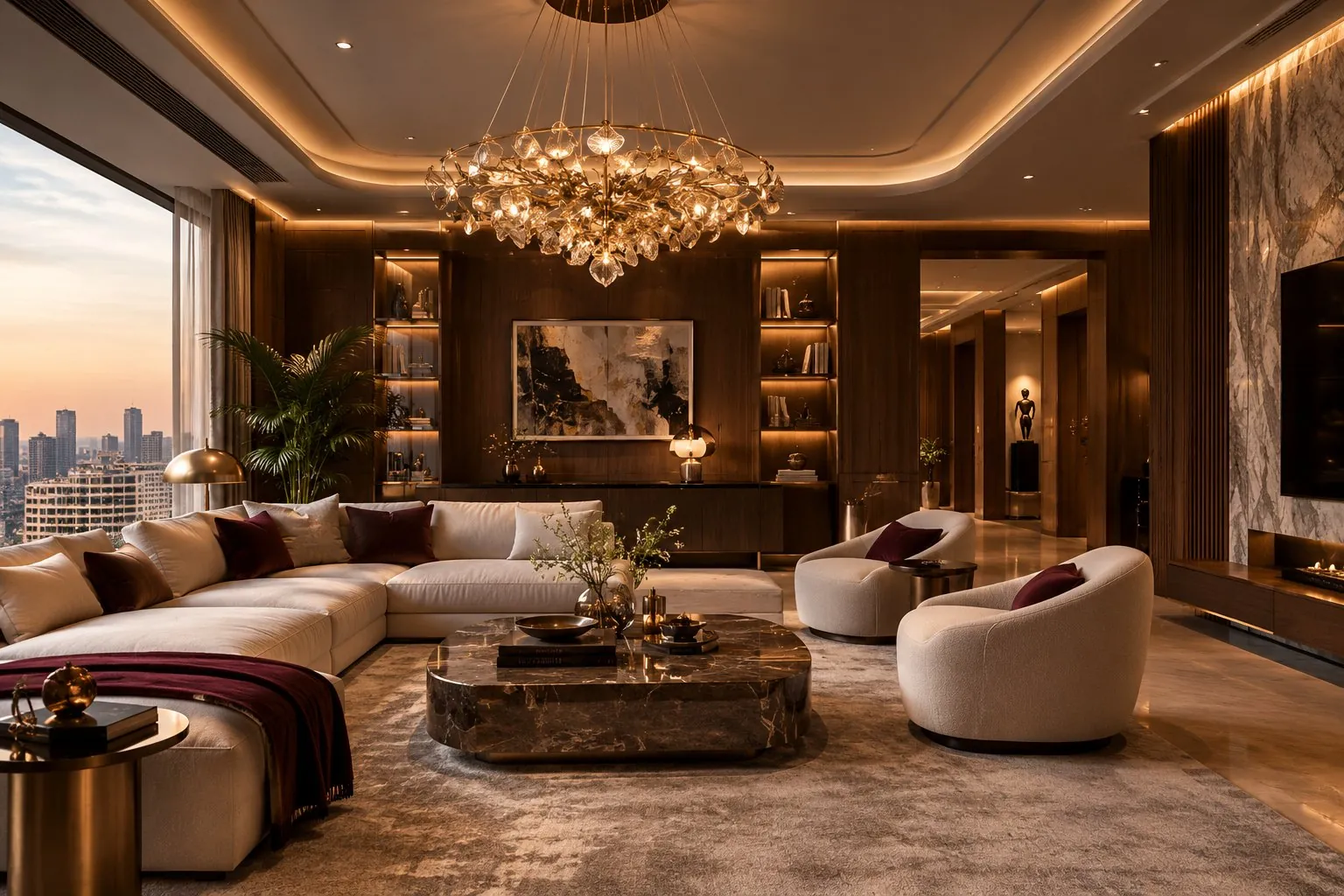
Accent light is what gives a room its drama. It picks out a stone wall, grazes a fluted panel, or lifts a piece of art. Because it is about contrast, a little goes a long way — usually a few tightly focused points rather than many. Look for a high colour-rendering index (CRI 90 or above) so that marble veining, timber grain and fabric colour appear true.
The decorative pieces — the chandelier, the pendant over the dining table — sit on top of these layers. They are jewellery. When they are asked to light the whole room on their own, they end up too bright to look at and the corners still feel dim.
Plan the switching, not just the fixtures
Three layers are only useful if you can control them separately. Each one belongs on its own circuit, and ideally on a dimmer, so the same room can move from a bright family afternoon to a quiet evening with a single scene. This is decided at the electrical drawing stage — retrofitting dimmable circuits after the false ceiling is closed is costly and rarely neat.
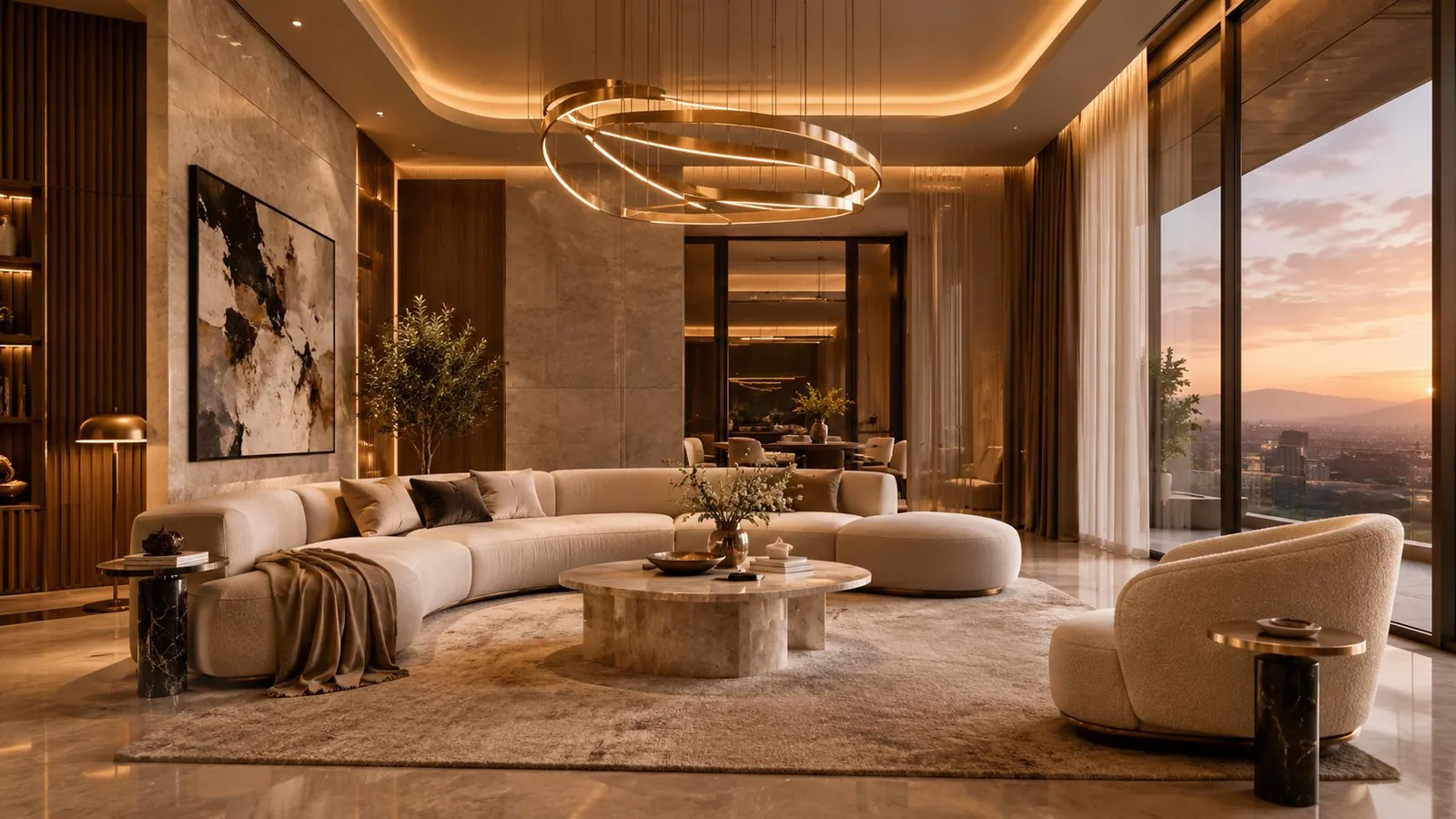
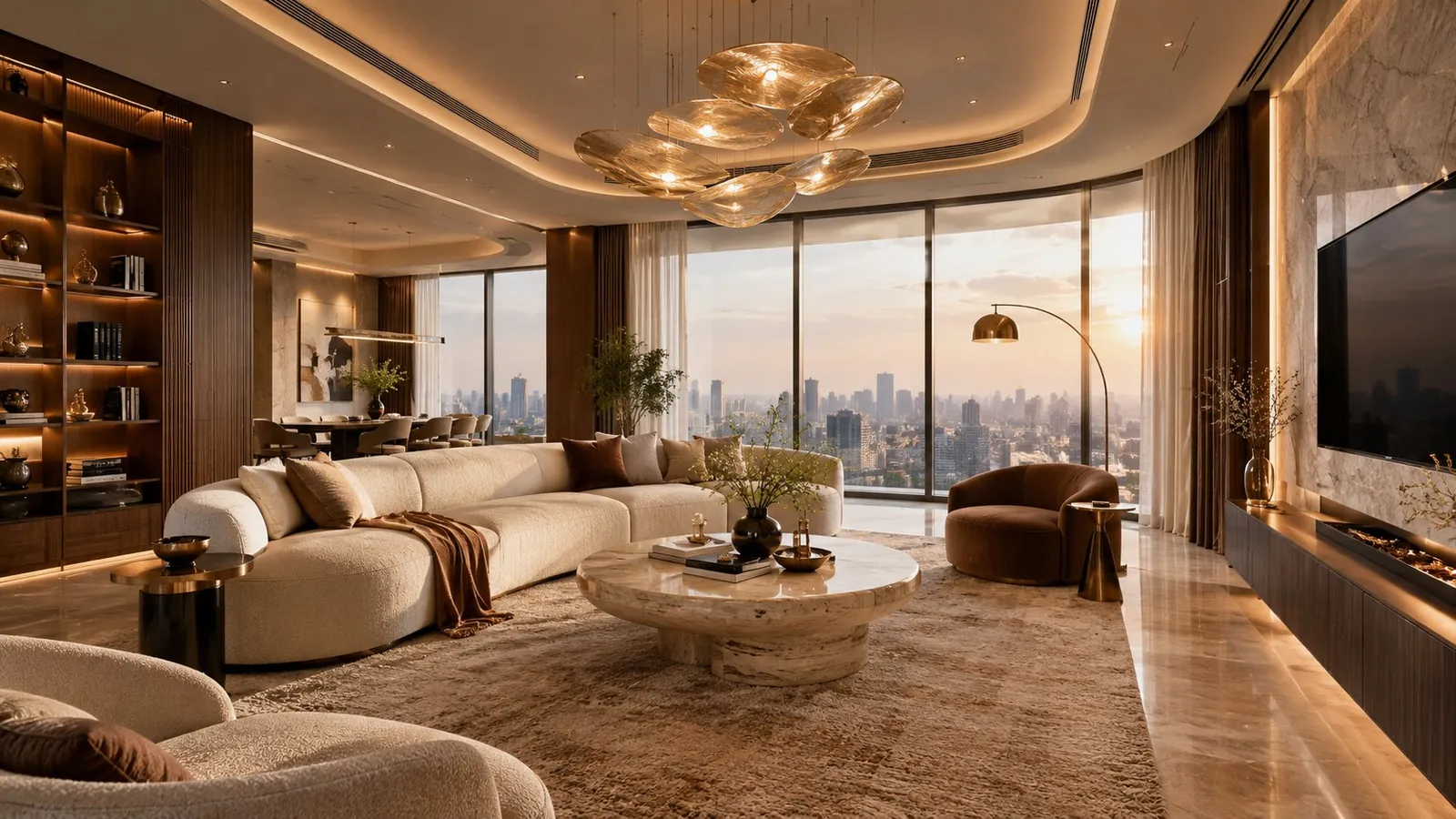
The test of a good lighting plan is simple. Turn every layer down to its evening setting and sit in the room. If it feels calm, warm and still a little mysterious, the drawings did their job.